We’ve been further delayed in our planting, since the rain just kept coming last week. But the stuff that’s out looks really good. The squash is blooming, the tomatoes and zinnias (mostly) bounced back from the hard frost we had, and the potato plants are looking lush. Todd was finally able to mow some yesterday, so we can walk around the yard without our knee-high boots now.
The raccoon (or another raccoon, who knows?) made another appearance this week, and had a squawking chicken in its clutches when Todd ran out to investigate. He chased the raccoon off and went looking for the chicken (in the dark, mind you). Luckily she was a white chicken, so he found her easily. She didn’t have a scratch on her, the feisty gal. So for those of you who have strong feelings about gun control, we are definitely feeling like we need a gun. We can’t just be throwing axes and cinderblocks at feral animals (our strategy thus far). We promise to only shoot things that attack the chickens (and rattlesnakes).
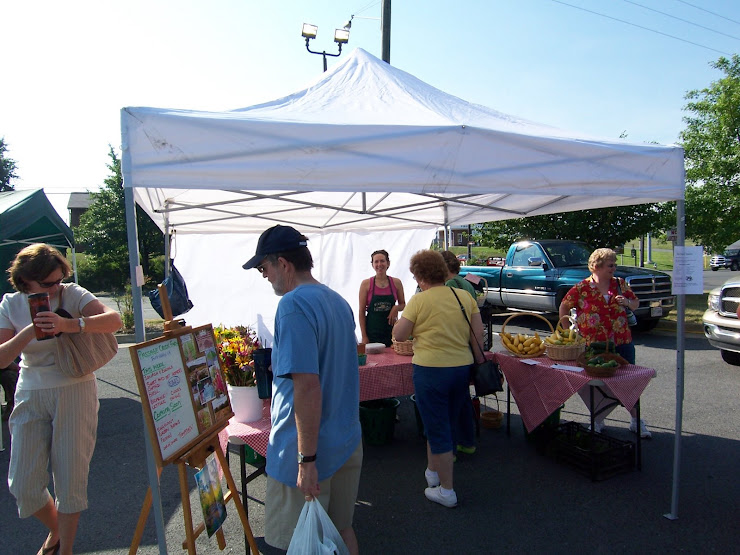
We start our first market at Fort Valley Nursery this Wednesday from 9 to 1, and we will also be setting up there on Sundays from 12 to 4. Next week (June 8 for the Monday shares and June 13 for the Saturday shares) is the last week of the Spring share. For those of you who have not signed up for Summer, we have spaces left, so please contact us soon if you are interested.
This Week:
2 heads lettuce (green leaf and Romaine)
Kale
Radishes
Swiss Chard
Garlic Scapes
Dill
What to do with it:
Garlic scapes are the stem that grows out of the garlic plant and blooms. If garlic were left to its own devices, this is how it would reproduce. The bloom would produce seeds. The way garlic is reproduced by growers is by planting the cloves, which form bulbs. The scape is like a tougher, garlicky tasting scallion. You can chop it up and use it as you would garlic, though it has a milder flavor. The part between the cut end and the bloom (just a swelling in the stem at this point) is the part you want to use. It works in salad dressing, eggs, stir-fries, and pretty much anything else you can think of.
We made a new Swiss chard dish last night that was really good. We sautéed some onions in butter and olive oil, then added ground turkey, and once that was cooked, added chopped chard leaves. We served it over rice with some grated parmesan and a yogurt-cilantro sauce (which is exactly what it sounds like: a bunch of minced cilantro in a cup or so of yogurt, mixed by hand or by blender). It was delish. You could probably substitute or add the kale if you boil it briefly first.
We have an excellent Caesar salad recipe on our website. It was Katherine’s mom’s way of fixing it, and it’s just the best. That’s ideal for the Romaine lettuce. We’ve been adding radishes to everything: burritos, salad, stir-fry, whatever. They’re mild enough so they can be thrown into anything. We’re into cheddar-dill biscuits lately, and chances are you have a million biscuit recipes on your cookbook shelf so just take one and add a couple tablespoons of chopped dill and a ½ cup or so of grated cheddar. If you’re feeling really fancy, poach an egg to place atop each half of biscuit. That’s a deluxe Sunday breakfast.
Monday, June 1, 2009


Monday, May 25, 2009
Spring CSA Newsletter
Passage Creek Farm CSA
Last week is best described as a week of loss. We had a raccoon get into the chicken coop, and (luckily) kill only one chicken before Todd found it. Thanks to Elliot, in fact, for fussing Saturday evening and causing Todd to take him for a walk outside. Otherwise we could have lost a lot more birds. Raccoons will kill just for the fun of it. We also had a heavy frost Monday night, and although we were able to get most of our stuff covered, we didn’t have enough covers to protect everything. So it looks like we lost about a third of our zinnias and a quarter of our tomatoes. Fortunately we had not put out the basil yet, because we surely would have lost it all, even with covers. It is definitely our most sensitive crop.
Our experiment in hired help is over. Joe went back to Northern Virginia this week and we were able to get a lot done while he was here. We also had our good friend Janice came out to help for a couple of days, so we really got some good weeding and planting done. It’s so nice to be able to see the onions again!
Things are looking good in the garden overall. The peas are coming on, and should be ready for harvest in about a week. The lettuce looks good and hasn’t started bolting yet, despite the hot weather. And we were able to pick some kohlrabi this week for the bags. The squash has been in the ground for about a week, and will probably be blooming soon. And the beans are happily emerging from the soil. Basil, parsley, okra and melons are headed out to the field this week. We’ll be busy!
This Week:
Salad mix
Kohlrabi
Escarole
Scallions
Cilantro
What to do with it:
Escarole is the thing that looks like a head of lettuce. It is actually a thick-leaved member of the chicory family. Some folks like to eat it raw, but we prefer it cooked. It doesn’t cook down quite as fast as Swiss chard, but you can treat it pretty much the same way. There are several recipes on our website that call for such a green, including the Italian bean soup and the cooked greens salad.
Kohlrabi is a member of the brassica family, which includes kale and broccoli. The leaves are generally not eaten, though they make a fine addition to soup stock. You can taste them for yourself and decide if you want to cook them as you would kale. They have a stronger flavor than kale leaves, so some people are put off. The bulbs are the juicy part. They are starchy like a potato but have a flavor more kin to broccoli. They can be sliced up raw as for crudités, sautéed till just tender with butter and onions, grated into a slaw, or cubed and added to soups or stews. There’s a celeriac remoulade recipe on our website that would accept kohlrabi as a substitute for the celeriac.
The rest of the items have appeared before in the bags. We prefer the scallions raw, since they’re so mild tasting that you don’t have to be to afraid of them. Just chop them into salad dressing or into a stir-fry (but at the end, so they don’t turn to mush). In fact, the kohlrabi, escarole, scallions and cilantro would all fit together nicely in a stir-fry. You could chop the kohlrabi into bite-sized pieces first and simmer it for a few minutes before throwing it into the wok, or just cook it for a bit longer than the rest of the ingredients. Add some garlic and soy sauce and serve over rice.
If you ever have recipes to share with us, please do so. We’d love to have more to share on our website.
Last week is best described as a week of loss. We had a raccoon get into the chicken coop, and (luckily) kill only one chicken before Todd found it. Thanks to Elliot, in fact, for fussing Saturday evening and causing Todd to take him for a walk outside. Otherwise we could have lost a lot more birds. Raccoons will kill just for the fun of it. We also had a heavy frost Monday night, and although we were able to get most of our stuff covered, we didn’t have enough covers to protect everything. So it looks like we lost about a third of our zinnias and a quarter of our tomatoes. Fortunately we had not put out the basil yet, because we surely would have lost it all, even with covers. It is definitely our most sensitive crop.
Our experiment in hired help is over. Joe went back to Northern Virginia this week and we were able to get a lot done while he was here. We also had our good friend Janice came out to help for a couple of days, so we really got some good weeding and planting done. It’s so nice to be able to see the onions again!
Things are looking good in the garden overall. The peas are coming on, and should be ready for harvest in about a week. The lettuce looks good and hasn’t started bolting yet, despite the hot weather. And we were able to pick some kohlrabi this week for the bags. The squash has been in the ground for about a week, and will probably be blooming soon. And the beans are happily emerging from the soil. Basil, parsley, okra and melons are headed out to the field this week. We’ll be busy!
This Week:
Salad mix
Kohlrabi
Escarole
Scallions
Cilantro
What to do with it:
Escarole is the thing that looks like a head of lettuce. It is actually a thick-leaved member of the chicory family. Some folks like to eat it raw, but we prefer it cooked. It doesn’t cook down quite as fast as Swiss chard, but you can treat it pretty much the same way. There are several recipes on our website that call for such a green, including the Italian bean soup and the cooked greens salad.
Kohlrabi is a member of the brassica family, which includes kale and broccoli. The leaves are generally not eaten, though they make a fine addition to soup stock. You can taste them for yourself and decide if you want to cook them as you would kale. They have a stronger flavor than kale leaves, so some people are put off. The bulbs are the juicy part. They are starchy like a potato but have a flavor more kin to broccoli. They can be sliced up raw as for crudités, sautéed till just tender with butter and onions, grated into a slaw, or cubed and added to soups or stews. There’s a celeriac remoulade recipe on our website that would accept kohlrabi as a substitute for the celeriac.
The rest of the items have appeared before in the bags. We prefer the scallions raw, since they’re so mild tasting that you don’t have to be to afraid of them. Just chop them into salad dressing or into a stir-fry (but at the end, so they don’t turn to mush). In fact, the kohlrabi, escarole, scallions and cilantro would all fit together nicely in a stir-fry. You could chop the kohlrabi into bite-sized pieces first and simmer it for a few minutes before throwing it into the wok, or just cook it for a bit longer than the rest of the ingredients. Add some garlic and soy sauce and serve over rice.
If you ever have recipes to share with us, please do so. We’d love to have more to share on our website.
Tuesday, May 19, 2009
Pictures of Elliot
Here are some recent photos. Sorry to be so delinquent in posting them, but it's getting busy around here!


Passage Creek Farm CSA - Week of May 18, 2009
NOTE: Previous CSA newsletters are posted below.
We had our first farmers’ market this weekend, and as May markets go, it was a big success for us. We were hoping it would be busier, but with Mayfest going on in Strasburg, we had some competition. But we made some money, sold some annuals and some greens, and did it all while managing a four-month-old baby. Elliot was a super trooper and charmed the market visitors thoroughly.
Our hired help worked out well last week. Joe helped us get our tomatoes, squash, cucumbers and zinnias planted, and some significant weeding done. We can now see our spinach and beets! The snap peas are beginning to come in, so they should be appearing in the bags soon. This week will present some challenges for us, mostly in the form of night temperatures in the 30s. It’s unusual for this late in May, so we thought we were in the clear, but we’re going to be scrambling to get everything covered today. What a fickle month!
We harvested some mustard greens for the bags this week, and as you can see they have some tiny holes in them. “How ugly!” you might say. But don’t, at least not until you know the flea beetle story. These little critters love the brassica family, which includes all mustard greens. Since we grow organically, we can either pay for (expensive) organic sprays that are still fairly toxic (Concern, for example, says it will harm fish, and we happen to have a lovely little creek nearby), or we can cover the crops with row covers. We opt for the latter, which has its own challenges, primarily that it is so windy here that it is hard to keep row covers on the crops. But we diligently do it every year and every year the row covers are all over the field after a hard wind. So, the flea beetles get to the greens. We hope you won’t hold a small cosmetic defect against these delicious greens. They are extremely healthy and make a quick meal.
This Week:
Two heads lettuce (green leaf, red leaf)
Mustard mix (mizuna, Savannah tendergreens, tat soi, arugula)
Dill
Radishes
Basil (that’s right, basil, right smack in the middle of May!)
What to do with it:
So we thought you might still be a bit overwhelmed with lettuce from last week, so we only put in two heads this week. The red leaf is called Cherokee, and believe it or not, that’s as big as it gets. Small but tasty. The mustard greens are for stir-frying, steaming, or even eating raw. They’re all very mild, and they will cook down quickly, so only give them a couple minutes in the wok or frying pan. If you add onions and mushrooms, you have a very simple stir-fry. You can dress it up with coconut milk, some of the basil, or even shrimp or chicken. We like to add carrots when we have them. Todd will often add a scrambled egg or two, and sometimes a bit of peanut butter. If you want to eat the greens raw, we recommend blending some with the lettuce for a slightly spicy salad.
The radishes (and their greens) can also be added to the stir-fry (the greens will have a funny texture raw, but this will disappear with cooking). These radishes are also fairly mild. Todd says he wishes they were spicier, so for those of you who are afraid they might be too spicy, we hope you are pleasantly surprised. The dill is versatile – if you’re into baking, try some cheddar-dill biscuits or some savory bread. It’s an interesting addition to salad dressing, and also goes well with eggs. We like to make a lot of frittatas (there’s a zucchini-okra frittata on our website, but you can put anything in it you want), and we often add dill or basil, but usually not both at the same time.
NOTE: Previous CSA newsletters are posted below.
We had our first farmers’ market this weekend, and as May markets go, it was a big success for us. We were hoping it would be busier, but with Mayfest going on in Strasburg, we had some competition. But we made some money, sold some annuals and some greens, and did it all while managing a four-month-old baby. Elliot was a super trooper and charmed the market visitors thoroughly.
Our hired help worked out well last week. Joe helped us get our tomatoes, squash, cucumbers and zinnias planted, and some significant weeding done. We can now see our spinach and beets! The snap peas are beginning to come in, so they should be appearing in the bags soon. This week will present some challenges for us, mostly in the form of night temperatures in the 30s. It’s unusual for this late in May, so we thought we were in the clear, but we’re going to be scrambling to get everything covered today. What a fickle month!
We harvested some mustard greens for the bags this week, and as you can see they have some tiny holes in them. “How ugly!” you might say. But don’t, at least not until you know the flea beetle story. These little critters love the brassica family, which includes all mustard greens. Since we grow organically, we can either pay for (expensive) organic sprays that are still fairly toxic (Concern, for example, says it will harm fish, and we happen to have a lovely little creek nearby), or we can cover the crops with row covers. We opt for the latter, which has its own challenges, primarily that it is so windy here that it is hard to keep row covers on the crops. But we diligently do it every year and every year the row covers are all over the field after a hard wind. So, the flea beetles get to the greens. We hope you won’t hold a small cosmetic defect against these delicious greens. They are extremely healthy and make a quick meal.
This Week:
Two heads lettuce (green leaf, red leaf)
Mustard mix (mizuna, Savannah tendergreens, tat soi, arugula)
Dill
Radishes
Basil (that’s right, basil, right smack in the middle of May!)
What to do with it:
So we thought you might still be a bit overwhelmed with lettuce from last week, so we only put in two heads this week. The red leaf is called Cherokee, and believe it or not, that’s as big as it gets. Small but tasty. The mustard greens are for stir-frying, steaming, or even eating raw. They’re all very mild, and they will cook down quickly, so only give them a couple minutes in the wok or frying pan. If you add onions and mushrooms, you have a very simple stir-fry. You can dress it up with coconut milk, some of the basil, or even shrimp or chicken. We like to add carrots when we have them. Todd will often add a scrambled egg or two, and sometimes a bit of peanut butter. If you want to eat the greens raw, we recommend blending some with the lettuce for a slightly spicy salad.
The radishes (and their greens) can also be added to the stir-fry (the greens will have a funny texture raw, but this will disappear with cooking). These radishes are also fairly mild. Todd says he wishes they were spicier, so for those of you who are afraid they might be too spicy, we hope you are pleasantly surprised. The dill is versatile – if you’re into baking, try some cheddar-dill biscuits or some savory bread. It’s an interesting addition to salad dressing, and also goes well with eggs. We like to make a lot of frittatas (there’s a zucchini-okra frittata on our website, but you can put anything in it you want), and we often add dill or basil, but usually not both at the same time.
(From May 11) Passage Creek Farm CSA
The rain seems to have backed off for the time being, which means we can get some planting done this week. Our tomatoes are huge and so ready to be planted. It’s like a little forest in the greenhouse. The evenings are a little cool right now, but we should be safely post-frost within days. We have our first market this Saturday, so we’re excited to unload some our bedding plants that have been crowding the greenhouse onto the general public. It will be nice to be able to walk around in there!
The field is already crowded with weeds. We’ve tackled the weeding of the strawberries, which are in their second year, and hopefully will be plentiful enough to make an appearance in the spring shares. The peas are growing above the weeds for the moment, but the lamb’s quarters are gaining fast. We can still see the spinach and beets, but just barely. This week also begins our first foray into paid labor, since Katherine’s step-nephew will be visiting for two weeks and helping us out. He will be intimately familiar with the hand hoe by the time he goes home. Hopefully we won’t turn him off totally to gardening.
This Week:
Three heads lettuce (green leaf, butterhead, red leaf)
Swiss Chard (baby sized, you can leave the stems)
Kale
Cilantro
What to do with it:
Cilantro is THE love-it-or-hate-it herb, and it unfortunately does not pair well with THE love-it-or-hate-it vegetable, okra (unless you know something we don’t). But we at PCF love cilantro, and wish it were easier to grow and make plentiful for the whole season. We make black bean burritos once a week, and cilantro is always a treat. When we’re feeling adventurous and we make Indian food, we put cilantro in that, too. It’s a nice addition to salad dressing in moderation. If you hate it, don’t worry, you probably won’t see much of it after this week.
There are a couple of recipes on our website worth checking out this week: the Italian Bean Soup is great with kale or chard, as is the Cooked Greens Salad. And here’s one we featured last year in the newsletter for Lentil Soup with Kale:
Simmer one cup red lentils or yellow split peas in two cups water, with one small onion, diced; one or two cloves garlic, diced; a chopped carrot (not peeled); a tsp curry powder and ½ tsp turmeric, and salt and pepper to taste. Simmer until lentils are soft and then puree or put through a food mill. Return to cooktop and add more water if the soup is too thick. Add a chopped hot pepper or some red pepper flakes, and season with more curry or S/P if needed. Meanwhile, start some rice to go with the soup. Strip some kale leaves off the ribs and chop coarsely. Rinse and add to the lentil soup. Continue to simmer until the rice is done, at which time the kale should be nice and tender. Check for seasoning. Serve soup over rice and garnish with yogurt and chutney.
Normally we would tell you to boil the kale before cooking, but this weeks leave are young and very tender, so don’t over cook them. For the recipe above, we’ve found it’s not necessary to boil the kale first even with more mature leaves. Chard takes almost no time at all to sauté, maybe 5 minutes. We personally feel that overcooked greens are devoid of flavor and nutritional value, but others like hard-cooked greens, so follow your bliss.
Hope this gets your mouth watering!
The rain seems to have backed off for the time being, which means we can get some planting done this week. Our tomatoes are huge and so ready to be planted. It’s like a little forest in the greenhouse. The evenings are a little cool right now, but we should be safely post-frost within days. We have our first market this Saturday, so we’re excited to unload some our bedding plants that have been crowding the greenhouse onto the general public. It will be nice to be able to walk around in there!
The field is already crowded with weeds. We’ve tackled the weeding of the strawberries, which are in their second year, and hopefully will be plentiful enough to make an appearance in the spring shares. The peas are growing above the weeds for the moment, but the lamb’s quarters are gaining fast. We can still see the spinach and beets, but just barely. This week also begins our first foray into paid labor, since Katherine’s step-nephew will be visiting for two weeks and helping us out. He will be intimately familiar with the hand hoe by the time he goes home. Hopefully we won’t turn him off totally to gardening.
This Week:
Three heads lettuce (green leaf, butterhead, red leaf)
Swiss Chard (baby sized, you can leave the stems)
Kale
Cilantro
What to do with it:
Cilantro is THE love-it-or-hate-it herb, and it unfortunately does not pair well with THE love-it-or-hate-it vegetable, okra (unless you know something we don’t). But we at PCF love cilantro, and wish it were easier to grow and make plentiful for the whole season. We make black bean burritos once a week, and cilantro is always a treat. When we’re feeling adventurous and we make Indian food, we put cilantro in that, too. It’s a nice addition to salad dressing in moderation. If you hate it, don’t worry, you probably won’t see much of it after this week.
There are a couple of recipes on our website worth checking out this week: the Italian Bean Soup is great with kale or chard, as is the Cooked Greens Salad. And here’s one we featured last year in the newsletter for Lentil Soup with Kale:
Simmer one cup red lentils or yellow split peas in two cups water, with one small onion, diced; one or two cloves garlic, diced; a chopped carrot (not peeled); a tsp curry powder and ½ tsp turmeric, and salt and pepper to taste. Simmer until lentils are soft and then puree or put through a food mill. Return to cooktop and add more water if the soup is too thick. Add a chopped hot pepper or some red pepper flakes, and season with more curry or S/P if needed. Meanwhile, start some rice to go with the soup. Strip some kale leaves off the ribs and chop coarsely. Rinse and add to the lentil soup. Continue to simmer until the rice is done, at which time the kale should be nice and tender. Check for seasoning. Serve soup over rice and garnish with yogurt and chutney.
Normally we would tell you to boil the kale before cooking, but this weeks leave are young and very tender, so don’t over cook them. For the recipe above, we’ve found it’s not necessary to boil the kale first even with more mature leaves. Chard takes almost no time at all to sauté, maybe 5 minutes. We personally feel that overcooked greens are devoid of flavor and nutritional value, but others like hard-cooked greens, so follow your bliss.
Hope this gets your mouth watering!
(From May 4) Welcome to Passage Creek Farm’s 2009 Spring CSA!
We’ve started our earliest harvest ever this year, and it’s a daunting experiment for us. The bags this week are a little lighter than we had hoped, but they will continue to grow each week. The season so far has been kind to us: we haven’t had a frost in weeks, and we’ve been getting plenty of rain. We only had to water once during that early heat spell.
The greenhouse is packed with veggies to plant. Tomatoes, squash, okra and peppers are just a few of the plants that are ready to go in the ground. And we’re betting we won’t get another frost this spring (of course, anything we plant right now will be covered – the weather’s turned on us before!). The kale, kohlrabi and peas are all looking good in the field, so those should be appearing in your bags soon.
This Week:
Salad Mix (green leaf, red leaf and butterhead lettuces)
Spinach
Swiss Chard (baby sized, you can leave the stems)
Baby scallions
Oregano
What to do with it:
Salad mix is easy – just toss with some oil and vinegar on and you’re all set. Freshly chopped oregano makes a lovely addition to salad dressing. If you’re otherwise at a loss as to what to do with oregano, just hang it upside-down in you kitchen. You’ll have dried oregano whenever you need it. To keep herbs fresh longer, we generally recommend cutting the ends and putting in a glass of water and storing in the fridge (except for basil – store at room temp). Swiss chard is delicious sautéed with garlic and olive oil. We like ours with grits and parmesan or quinoa. Mushrooms and onions go well with chard. Spinach cooks down fast, so we tend to eat it fresh with salad. But we’ve kept it separate from the salad mix for you I case you want to steam it or sauté it (like for chard). The scallions can go with anything above. Enjoy!
Note: We were forced to use Ziploc bags this week, since we couldn’t find our regular bags for packaging greens. If you can’t reuse these bags, we can, so you don’t have to throw them out. In fact, that’s generally true of all the bags we use. You can leave them for us at your regular pickup spot or drop them at market. Thanks!
We’ve started our earliest harvest ever this year, and it’s a daunting experiment for us. The bags this week are a little lighter than we had hoped, but they will continue to grow each week. The season so far has been kind to us: we haven’t had a frost in weeks, and we’ve been getting plenty of rain. We only had to water once during that early heat spell.
The greenhouse is packed with veggies to plant. Tomatoes, squash, okra and peppers are just a few of the plants that are ready to go in the ground. And we’re betting we won’t get another frost this spring (of course, anything we plant right now will be covered – the weather’s turned on us before!). The kale, kohlrabi and peas are all looking good in the field, so those should be appearing in your bags soon.
This Week:
Salad Mix (green leaf, red leaf and butterhead lettuces)
Spinach
Swiss Chard (baby sized, you can leave the stems)
Baby scallions
Oregano
What to do with it:
Salad mix is easy – just toss with some oil and vinegar on and you’re all set. Freshly chopped oregano makes a lovely addition to salad dressing. If you’re otherwise at a loss as to what to do with oregano, just hang it upside-down in you kitchen. You’ll have dried oregano whenever you need it. To keep herbs fresh longer, we generally recommend cutting the ends and putting in a glass of water and storing in the fridge (except for basil – store at room temp). Swiss chard is delicious sautéed with garlic and olive oil. We like ours with grits and parmesan or quinoa. Mushrooms and onions go well with chard. Spinach cooks down fast, so we tend to eat it fresh with salad. But we’ve kept it separate from the salad mix for you I case you want to steam it or sauté it (like for chard). The scallions can go with anything above. Enjoy!
Note: We were forced to use Ziploc bags this week, since we couldn’t find our regular bags for packaging greens. If you can’t reuse these bags, we can, so you don’t have to throw them out. In fact, that’s generally true of all the bags we use. You can leave them for us at your regular pickup spot or drop them at market. Thanks!
Sunday, May 17, 2009
Processing our first chicken
This video will show all the steps of how to clean and process a chicken. It is graphic, but we feel that there is a disconnect between people and food and wanted to show how to raise, clean and process your own food.
Subscribe to:
Comments (Atom)